
Gold Beyond Price: Does Gold Still Anchor the Global Financial System?
Focus Invest Group | Global Markets | November 2026
Why central banks continue to hold gold, what its changing role reveals about global finance, and whether it remains a reliable measure of value.
Is gold still a store of value? The question has become increasingly relevant as gold prices fluctuate, central banks reassess their reserves and investors look for stability in an uncertain international environment.
The answer is not as simple as the market’s latest price movement suggests.
Gold has survived the collapse of monetary systems, financial crises and fundamental changes in how money is created and exchanged. Its price can rise dramatically and fall just as sharply. Yet its presence in the international financial system has endured.
This creates an apparent contradiction. If modern currencies are no longer backed by gold, why do central banks continue to hold and purchase it?
Our view is that the answer lies in a distinction often overlooked in discussions about precious metals: the difference between an asset’s market price and its role within a financial system.
Gold is no longer the foundation of modern currencies. But it remains one of the few internationally recognised reserve assets that does not represent the financial liability of a government, bank or corporate issuer.
That characteristic does not make gold risk-free. It does, however, help explain why its relevance extends beyond the next market cycle.
Is Gold Still a Store of Value in Today’s Financial System?
Yes, but being a store of value does not mean maintaining a stable price.
Gold can preserve purchasing power over certain long periods while experiencing substantial fluctuations along the way. Its performance depends on when it is purchased, how long it is held and what alternative assets are used for comparison.
This distinction matters for both private investors and institutions.
An investor who purchases gold at a market peak may experience years of disappointing returns. A central bank holding gold as part of a diversified reserve portfolio may evaluate the same asset very differently.
The institution is not necessarily attempting to profit from a short-term price increase. It may be seeking to reduce dependence on particular currencies, counterparties or financial instruments.
In our assessment, gold’s strongest argument is not that it always appreciates. It is that its economic characteristics differ from those of conventional financial assets.
A government bond is a claim on an issuer. A bank deposit depends on a financial institution. Physical gold, when directly owned, does not require another party to fulfil a promise of repayment.
This independence is valuable, although it comes with its own costs and risks.
Gold should therefore be understood as a potential component of long-term financial resilience, not as a guarantee against losses.
Is Gold Still a Monetary Standard?
Not in the formal sense.
Under the traditional gold standard, currencies were linked to defined quantities of gold. The Bretton Woods framework later established a system in which the US dollar was convertible into gold for foreign monetary authorities, while other participating currencies maintained fixed exchange rates against the dollar.
That arrangement ended in the early 1970s.
Today’s major currencies operate within a fiat monetary system. Their value is not legally fixed to a particular quantity of gold.
A euro, dollar or pound does not entitle its holder to exchange it for a predetermined amount of precious metal.
Nevertheless, the end of gold convertibility did not eliminate gold’s monetary significance.
Central banks continue to report gold among their reserve assets. It is actively traded across international markets and remains relevant to discussions about reserve diversification.
There is an important difference between saying that gold backs modern currencies and saying that gold remains part of the international reserve system.
The first statement is generally incorrect. The second reflects the continuing role of the metal.
Our position is that gold is no longer the unit by which money is formally defined, but it remains an independent reference asset within the broader financial system.
Why Do Central Banks Continue to Buy Gold?
Central banks do not manage reserves in the same way that private investors manage speculative positions.
Their responsibilities may include maintaining liquidity, supporting monetary and financial stability, meeting international obligations and protecting the resilience of national balance sheets.
Gold can contribute to these objectives because it behaves differently from many conventional reserve assets.
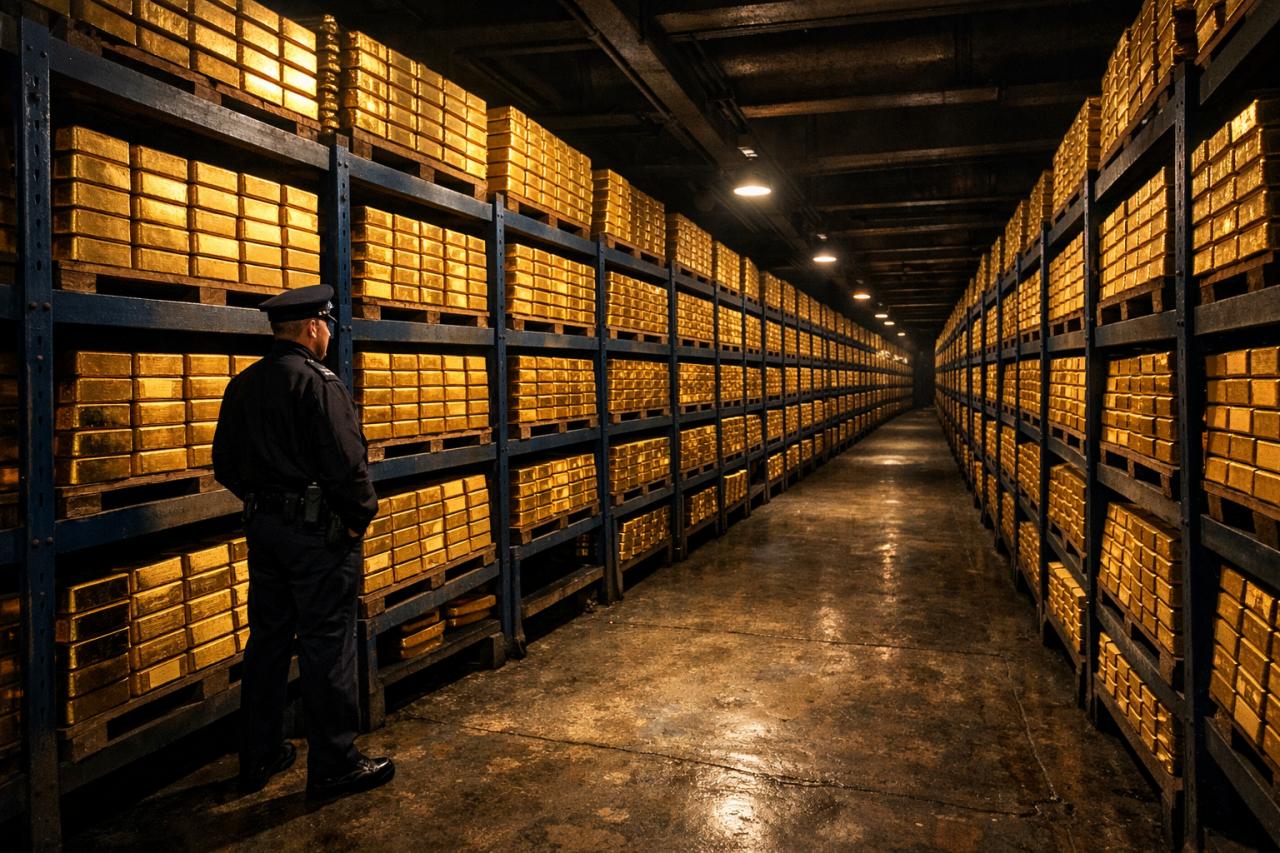
Physical bullion does not carry the credit risk of a sovereign bond issuer. It is internationally recognised and can be held independently of a particular currency.
At the same time, it does not generate interest, requires secure custody and may be less convenient than cash or highly liquid government securities when immediate payments are necessary.
This is why the argument for gold is primarily one of diversification rather than replacement.
The World Gold Council’s Gold Demand Trends reports document the continuing importance of official-sector demand. Its third-quarter 2026 research also describes how central bank activity, investment flows and changing consumer demand interact within the global gold market.
These developments should not automatically be interpreted as a rejection of the US dollar or other established reserve currencies.
A central bank can increase its gold holdings while continuing to depend on dollar-denominated assets for liquidity and international transactions.
In our view, the more meaningful development is not a competition between gold and currencies. It is the growing importance of maintaining reserves with different sources of risk.
Does Gold Preserve Value When Its Price Falls?
This is one of the most important questions investors should ask.
The expression store of value is frequently misunderstood.
An asset does not have to appreciate continuously to serve a long-term financial purpose. Equally, a long history of recognition does not guarantee that it will preserve purchasing power over every investment horizon.
Gold prices are influenced by several interconnected factors:
Real interest rates and expectations about monetary policy.
Movements in the US dollar and other major currencies.
Institutional and private investment demand.
Geopolitical uncertainty and financial-market conditions.
Changes in physical demand, supply and recycling.
When real interest rates rise, interest-bearing assets may become more attractive than gold, which does not produce income.
During periods of financial stress, gold may benefit from demand for defensive assets. But it can also decline if investors need liquidity or are forced to sell positions.
These relationships are not mechanical.
A geopolitical crisis does not guarantee an increase in gold prices. Falling interest rates do not guarantee positive returns. Even prolonged inflation does not ensure that gold will outperform every alternative asset.
For this reason, we would not describe gold as an instrument that eliminates financial uncertainty.
It is more accurate to say that gold introduces a different pattern of risk.
A store of value is not the same as a stable-price asset.
For investors, confusing these concepts can result in unrealistic expectations and poor decisions about when to buy, how much to allocate and when to sell.
Is Gold Becoming More Important Than the US Dollar?
Gold’s role in international reserves has attracted renewed attention, but that does not mean it is replacing the dollar as the central currency of global finance.
The US dollar continues to perform functions that physical gold cannot easily replicate.
It is widely used in international trade, lending, debt issuance, financial transactions and liquidity management.
Gold is primarily a reserve and investment asset. It is not generally used as the everyday unit in which international obligations are priced and settled.
The European Central Bank’s International Role of the Euro research examines the changing composition of international reserves and the importance of gold valuations.
One particularly important analytical distinction is the difference between the market value of gold holdings and the physical quantity held.
If gold prices increase substantially, the value of existing reserves can rise even when a central bank purchases no additional bullion.
A larger percentage of reserves allocated to gold does not therefore always indicate an equivalent increase in physical holdings.
This is an important detail when interpreting headlines about gold gaining ground against traditional reserve currencies.
Our assessment is that the international monetary system is not moving toward a simple choice between gold and the dollar.
Instead, reserve managers must balance assets that serve different functions.
Currencies and government securities provide transaction capabilities and liquidity. Gold may provide diversification and a form of asset ownership without an issuing counterparty.
These functions are complementary in some circumstances and competing in others.
The evidence supports a changing reserve landscape, not the conclusion that the dollar has already been replaced.
Why Does Gold Remain Relevant in a Digital Financial System?
Modern finance increasingly depends on electronic payments, digital securities, complex financial intermediaries and interconnected technology infrastructure.
Gold is fundamentally different.
The value of directly owned physical bullion is not derived from a payment application, a software platform or a promise from a particular issuer.
This independence helps explain why a traditional physical asset remains relevant in an increasingly digital economy.
However, physical ownership creates practical obligations.
Gold must be stored securely, insured where appropriate and converted into cash when liquidity is required. Its market value can also change significantly during the holding period.
The distinction becomes even more important when investors access gold through financial products.
A gold-backed exchange-traded fund, a custody arrangement and a digital token linked to bullion do not necessarily provide identical legal rights or risk exposures.
Each structure introduces its own considerations concerning ownership, custody, liquidity and counterparties.
Technological innovation can make gold easier to trade and hold indirectly. It does not eliminate the need to understand what an investor actually owns.
We believe this distinction will become increasingly important as financial products linked to physical assets continue to develop.
Can Gold Still Be Considered a Universal Measure of Value?
Gold has historically served as a reference point for wealth across different countries and monetary systems.
Its durability, scarcity and international recognition distinguish it from many other assets.
Yet calling gold a universal measure of value requires qualification.
There is no economic asset whose purchasing power remains constant under every circumstance.
Gold’s purchasing power changes. So does the purchasing power of currencies. Real estate, commodities and financial securities also experience changing valuations.
A quantity of gold that could purchase a particular property or basket of goods twenty years ago may not purchase the same amount today.
For that reason, we would avoid describing gold as an infallible measure of wealth.
Its significance is more specific.
Gold provides a widely recognised reference asset that exists outside the direct liabilities of individual governments and financial institutions.
That does not make it superior to every currency or financial instrument.
It makes it different.
And within a diversified financial system, that difference can be strategically important.
What Determines the Future of Gold?
The future of gold will not be determined by a single economic indicator.
Several forces will continue to interact.
Monetary policy will influence the opportunity cost of holding a non-income-producing asset. Real interest rates and expectations about future central bank decisions will remain important.
Geopolitical developments may affect how institutions assess exposure to particular currencies, jurisdictions and counterparties.
Investment demand can change quickly. Exchange-traded funds, institutional allocations and private purchases can contribute to substantial movements in the market.
Physical demand and supply also matter. Elevated prices can reduce jewellery consumption, encourage recycling and influence the economics of mining projects.
These groups of market participants do not necessarily respond to the same signals.
A central bank may increase its reserves for strategic reasons while a jewellery buyer postpones a purchase because prices have become too high.
An institutional investor may reduce exposure to gold while another increases its allocation as part of a broader portfolio adjustment.
This diversity helps sustain an international market with participants operating on different time horizons.
It does not prevent corrections or guarantee long-term appreciation.
In our view, the most useful question is not whether every new price increase is justified.
It is whether the underlying reasons institutions hold gold remain relevant.
As long as monetary systems involve sovereign currencies, credit relationships and changing geopolitical risks, there is a credible argument for maintaining assets with different economic characteristics.
Gold is one such asset.
What Does Gold Mean for Long-Term Investment Strategy?
Gold should not be evaluated in isolation.
A sound investment strategy begins with the purpose of the capital being allocated.
Money required for short-term obligations needs liquidity and predictability. Capital committed to long-term investment may tolerate different risks.
Income-producing real estate, equities, bonds, cash and gold each serve different functions.
Gold does not generate rental income, dividends or contractual interest. Its return depends primarily on changes in market value, net of holding and transaction costs.
That limitation is significant.
At the same time, gold may provide diversification when its behaviour differs from other portfolio assets.
The appropriate allocation depends on investment objectives, financial circumstances, liquidity needs, time horizon and tolerance for loss.
There is no universally correct percentage that every investor should hold.
For Focus Invest Group, the broader lesson is that long-term capital preservation is not achieved by identifying one supposedly perfect asset. It requires understanding how different assets behave, what risks they introduce and how they contribute to the overall structure of capital.
Gold deserves consideration within that framework, but not exemption from it.
Frequently Asked Questions About Gold
Is gold still used to back currencies?
Major modern currencies are not formally convertible into gold at fixed rates. Gold remains part of the reserves held by many central banks, but those holdings do not represent a return to the traditional gold standard.
Why do central banks buy gold when prices are high?
Central banks may purchase gold for long-term diversification, reserve management and balance-sheet resilience. Their decisions are not necessarily based on short-term price expectations, although market prices can influence the timing and scale of purchases.
Is gold safer than holding cash?
The two serve different purposes. Cash and highly liquid deposits are generally better suited to immediate payments and short-term obligations. Gold introduces market-price risk but may offer different long-term diversification characteristics. Neither is universally safer.
Does gold protect against inflation?
Gold has sometimes preserved purchasing power over extended periods, but it is not a reliable short-term inflation hedge in every economic environment. Its performance depends on interest rates, currencies, investment demand and broader financial conditions.
Could the world return to a gold standard?
A return is theoretically possible but would require major changes to monetary institutions and international agreements. There is no established transition under way toward a universal gold-backed monetary system.
Will gold always increase in value?
No. Gold has experienced substantial declines and prolonged periods of weak performance. Its continuing role as a reserve asset does not guarantee positive investment returns.
Is gold a good long-term investment?
Gold may have a role in a diversified long-term portfolio, but its suitability depends on the investor’s objectives, time horizon, liquidity needs and risk tolerance. It does not generate income and can experience significant price volatility.
Conclusion: Gold’s Enduring Role Is Not Defined by Its Price
The most revealing aspect of the gold market is not that prices can reach new highs.
It is that gold continues to occupy a place in international reserves decades after the monetary system that once depended on it disappeared.
That persistence deserves attention.
Gold is not a universal currency. It is not a guaranteed inflation hedge. It is not a substitute for liquid financial assets or productive investments.
It is an internationally recognised asset with no sovereign issuer, a long history of monetary relevance and a distinct set of risks.
Our conclusion is that gold remains important not because its price is stable, but because its role within the financial system is fundamentally different from that of conventional currencies and financial claims.
For institutions and long-term investors, that distinction remains significant.
The next market correction may change the price of gold. It will not, by itself, resolve the larger questions about monetary confidence, reserve diversification and the structure of international capital.
The more enduring question is not whether gold will rise or fall next.
It is why financial institutions continue to assign it value across changing monetary regimes.
Ultimately, the question “is gold still a store of value?” cannot be answered by looking at its price alone. Its long-term relevance depends on the role it plays alongside currencies, bonds and other reserve assets.
And that question is likely to remain relevant well beyond the next market cycle.
Sources & Further Reading
Focus Invest Group | Global Markets & Investment Perspectives
This article is intended for general informational and analytical purposes and does not constitute investment advice. Institutional research is referenced as of November 2026.