
Energy Infrastructure Investment: The Grid as the New Frontier
Why electricity networks, grid capacity and infrastructure resilience are becoming central considerations for industrial development and long-term capital allocation.
Why Energy Infrastructure Investment Matters
Energy infrastructure investment is entering a new phase as electricity demand, industrial electrification and digital infrastructure place increasing pressure on power networks.
Artificial intelligence data centers, advanced manufacturing and electrified industrial processes depend on reliable electricity supply and sufficient transmission and distribution capacity.
For investors evaluating long-term industrial opportunities, grid availability is becoming an increasingly important factor in site selection, project feasibility and operational resilience.
Electricity generation remains essential. However, generation capacity alone cannot support economic expansion if the networks connecting producers and consumers are unable to accommodate demand.
Electricity generation creates supply. Grid infrastructure determines whether that supply can reach productive economic activity when and where it is needed.
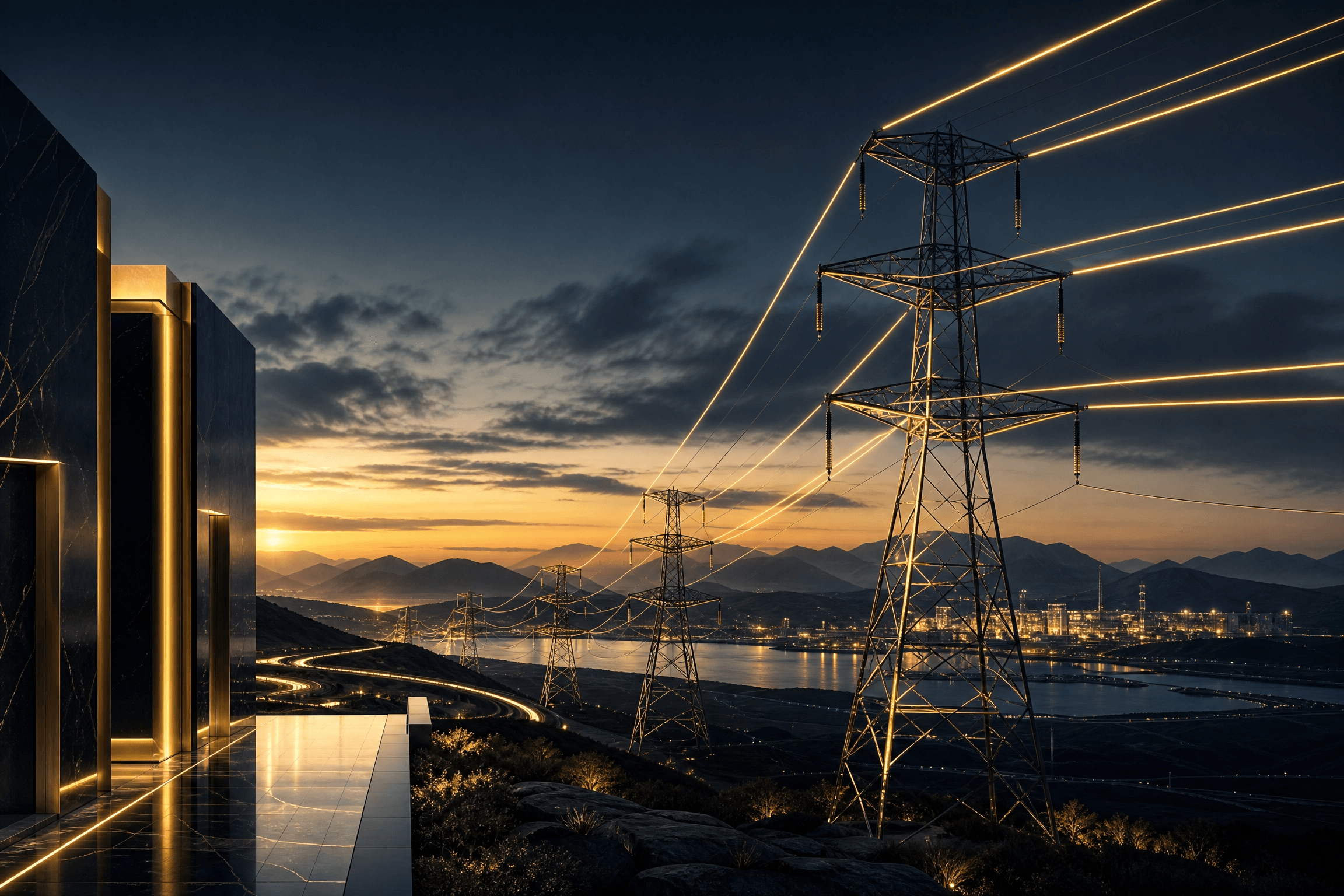
Beyond Generation: The Electricity Grid Bottleneck
For years, much of the public discussion around the energy transition focused on expanding generation capacity through renewable and other low-carbon technologies.
Yet electricity must also be transported from generation facilities to businesses, industrial sites and households.
When transmission or distribution networks are constrained, additional generation capacity may not translate into usable electricity at the locations where demand is growing.
This creates a structural challenge for energy systems and an important area of consideration for energy infrastructure investment.
Network modernization, grid reinforcement, interconnections and digital monitoring technologies can help improve system flexibility and support future industrial development.
The Convergence of AI and Energy Infrastructure Investment
The expansion of artificial intelligence infrastructure is adding a new dimension to electricity demand.
Data centers require reliable power, cooling systems and infrastructure capable of supporting continuous operations.
The International Energy Agency's Energy and AI analysis examines the relationship between expanding data center activity and electricity system requirements.
For industrial and digital infrastructure developers, grid connection availability can influence both project timelines and location decisions.
Where electricity networks are constrained, businesses may need to consider alternative connection arrangements, energy storage, demand flexibility or additional infrastructure investment.
Grid Connection Certainty
Reliable information about available network capacity, connection costs and implementation timelines can improve project planning.
System Flexibility
Storage, demand management and appropriate backup systems can help reduce exposure to certain electricity supply disruptions.
Why Strategic Capital Evaluates Grid Infrastructure
Electricity networks form part of the physical infrastructure supporting industrial productivity.
Just as logistics facilities depend on roads, ports and transport corridors, energy-intensive operations depend on adequate electricity infrastructure.
From an investment perspective, energy infrastructure investment should therefore be assessed alongside industrial demand, regulatory conditions, project economics and infrastructure access.
Regions where electricity networks are modernized and connection procedures are predictable may offer advantages for certain types of industrial development.
Nevertheless, infrastructure availability is only one component of investment attractiveness. Labor availability, transport access, financing conditions, market demand and execution capability also influence long-term outcomes.
Smart Grids, Interconnections and HVDC Technology
Modern electricity systems increasingly require technologies capable of managing complex power flows and integrating different sources of generation.
Smart grid technologies can improve monitoring, control and operational flexibility within electricity networks.
High-voltage direct current (HVDC) transmission can be useful for certain long-distance electricity connections and cross-border infrastructure projects.
These technologies may support more efficient integration of generation resources with major demand centers.
Their investment attractiveness, however, depends on project-specific engineering requirements, financing structures, regulation and expected demand.
How Should Investors Evaluate Energy Infrastructure Opportunities?
Before allocating capital to an electricity infrastructure project, investors should evaluate both its technical feasibility and its commercial fundamentals.
Demand Fundamentals
Is there a credible long-term need for the infrastructure being developed?
Grid Capacity
Are connection capacity, technical requirements and implementation timelines clearly established?
Regulatory Framework
Which approvals, tariffs and regulatory decisions may influence project economics?
Capital Requirements
Are construction costs, financing assumptions and potential overruns adequately evaluated?
Revenue Sustainability
How will the project generate revenue, and what factors could affect its stability?
Long-Term Resilience
Can the infrastructure remain operationally and economically relevant as technologies and demand patterns evolve?
Energy Infrastructure as a Foundation for Industrial Growth
At Focus Invest Group, we consider electricity infrastructure an important component of the wider investment environment.
Understanding the relationship between energy availability, industrial demand and infrastructure capacity supports more informed evaluation of long-term development opportunities.
Energy security is not only a policy objective. It is an operational foundation for industrial resilience and long-term economic development.
Focus Invest Group / Strategic Perspective
A disciplined investment approach must connect infrastructure fundamentals with realistic financial assumptions, governance and execution quality.
Conclusion: The Grid as the New Frontier
Energy infrastructure investment is becoming increasingly relevant to the future of industrial development, digital infrastructure and long-term economic competitiveness.
Electricity networks, transmission capacity, grid modernization and system flexibility are interconnected components of a resilient energy system.
For investors, the central challenge is to distinguish structural infrastructure demand from the commercial attractiveness of individual projects.
The grid represents an important frontier for long-term capital, but sustainable value creation continues to depend on disciplined evaluation, financing and execution.
Institutional Sources
The following resources provide background information on electricity infrastructure, energy demand and long-term investment trends.
- International Energy Agency — Energy and AI
- International Energy Agency — Electricity Grids and Secure Energy Transitions
- European Commission — Energy Infrastructure
- European Investment Bank — Research and Publications
This article is published for general informational and analytical purposes. It does not constitute individualized investment, financial or legal advice.